


Does VR Esports Have a Future in Competitive Gaming?


Have we gotten to a point where immersive VR titles can support serious competitive ecosystems?
In other words: can VR esports become a real thing?
First, let’s define “a real thing” since that’s a pretty vague concept.
By “a real thing”, I mean a sustainable esports ecosystem(s) with recurring first-party and third-party tournaments, professional athletes with adequate contracts, and returning viewers.
With that in mind, let’s see what VR esports have to offer right now, what exactly makes them appealing, and what could be the biggest obstacles on their trajectory to success.
VR esports have come a long way
VR esports are still a niche thing, but they have advanced a long way since their early days. Almost a decade ago, in 2017, the VR Challenger League kicked off. ESL had the backing of Oculus and Intel and provided the first glimpses into the VR esports scene.
In 2018, the league shortened its name to just VR League and featured $250,000 in prize money across games like Echo Arena, Echo Combat, Space Junkies, and Onward.
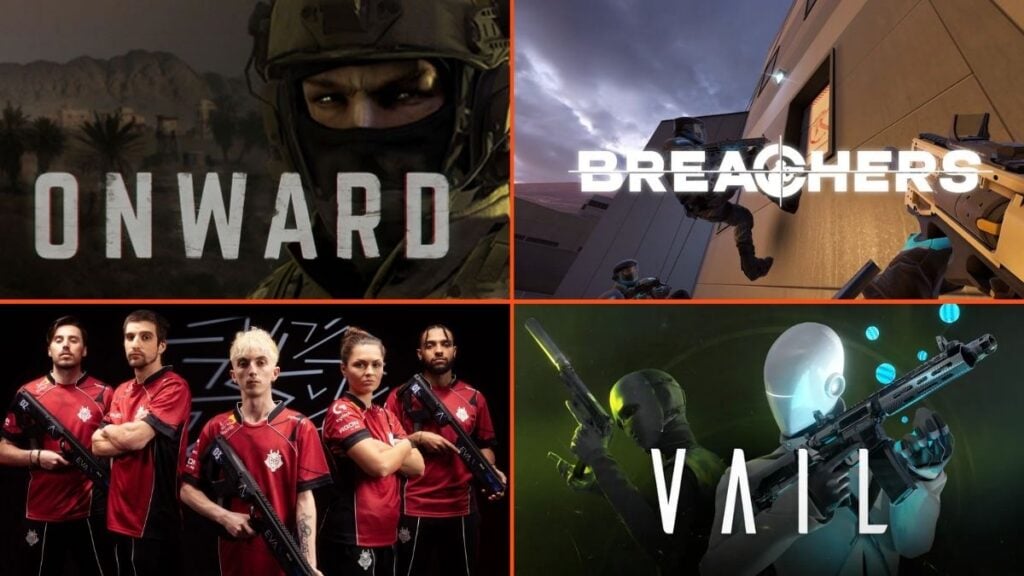
Fast-forward to 2026, we have the EVA Pro League with 8 esports organisations, home and away fixtures, and dedicated VR arenas that drastically raise the level of competitiveness.
Existing VR esports
Here’s the crème de la crème of competitive VR esports right now:
- EVA Pro League Game: This is not a game per se, but a true VR experience. You can’t download it. Instead, you need to find the closest physical EVA arena near you, schedule a visit, and enjoy dedicated 500m2 arenas with high-END VR equipment.
- Onward: A highly sophisticated VR military simulation that just got a major 2.0 Update in late March 2025.
- Breachers: A tactical first-person shooter that serves as the VR successor of the popular tac-FPS game Rainbow Six: Siege
- VAIL: A popular VR FPS released in February 2024 after being in early access for roughly 15 months.
While there are YouTube videos of popular VR esports competitions, mainly the VR Masters League, the official VRML website is currently in a phase of restructuring. The whole portal is offline; only the “restructuring” status message is currently accessible.
That’s going to be a recurring problem for the future of VR esports: a lack of funding. The esports scene itself has been through such a crisis already, so it’s not surprising to see VR esports platforms shutting down and restructuring to cut down on costs and at least keep the portion of their operations alive and kicking.
What Makes VR Esports Appealing?
VR esports are appealing for several reasons, the biggest of which is their unique gameplay aspects. Games like Onward, Breachers, and VAIL don’t just reward your tactical and mechanical skills; they reward your athletic abilities too. There’s no mouse pointing here; you need to be precise and accurate with the in-game weapons, taking realistic simulation to a whole new level.
The possibilities are endless, too. You can climb, vault, rappel, and execute highly coordinated assaults with your teammates. While there are so many new things to do and explore, the tactical concepts ought to be familiar, especially if you’ve ever played tactical FPS games like Rainbow Six: Siege or even Counter-Strike 2.
The biggest long-term issues
Needless to say, VR esports have encountered several issues that make their feasibility harder to achieve:
- Funding: It’s true, without hefty VC funds, VR esports will never become mainstream. It needs money to attract returning viewers and keep its competitive ecosystems alive and kicking.
- Hardware accessibility: VR hardware is still fairly expensive. Sure, you can get a usable Oculus Rift S setup for home use for $200, assuming you have a solid PC. But standards for competitive gameplay are much higher and go beyond just the price; you’ll need plenty of adequate space too.
- Viewing experience is far from perfect: These games feature real people in VR gear traversing complex digital environments. That said, it’s not surprising to see just how chaotic the viewing experience can be. Some games are making all the right moves. Take VAIL as the perfect example, featuring observer tools that offer various camera perspectives and player outlines for a more intuitive spectating experience.
Can VR esports become mainstream?
VR esports has the foundations to become something much bigger, but competitive potential alone won’t be enough to take it mainstream. The technology needs to become more accessible, the competitive game library needs to expand, and the scene needs stronger tournament infrastructure and sustained investment to support long-term growth. Ultimately, VR esports doesn’t need to reinvent competitive gaming; it needs to make the experience compelling enough for players, organisers, sponsors, and audiences to invest in its future. Until those pieces fall into place, mainstream success will remain a possibility rather than an inevitability.




Related Articles
All Esports News
 LoL
 Esports
 CS2
 LoL
 LoL
 LoL

 Valorant
 Valorant
 LoL
 LoL
No comments yet











 Italy. Seria A. EA FC 25. (2x4 min)


 World Cup. EA FC 25. (2x4 min)


 Germany. Bundesliga. EA FC 25. (2x4 min)


 Spain. LaLiga. EA FC 25. (2x4 min)


 Copa Libertadores. EA FC 25. (2x4 min)



Leave a Comment
Join our community or access your account to post a comment.