


Learn Breeze callouts easily in Valorant with our map


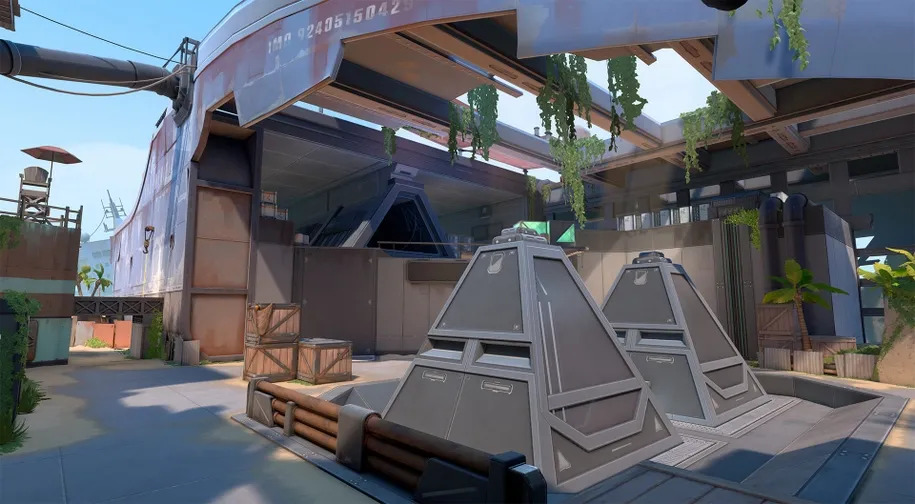
Valorant Breeze callouts are important to know. The large map size makes it hard to know where enemies are, and knowing is half the battle.
Breeze is one of the largest maps in Valorant. It’s widely known as one of the game’s least popular maps due to the difficulty of keeping track of enemies. With long areas of space and multiple peeking areas, it’s easy to die and not even know how. This is especially true for players new to the map. Gathering information about an enemy’s location after a teammate dies is difficult unless they use the correct callout, even on smaller maps like Bind and Ascent.
However, not knowing Breeze callouts means missing key information. Luckily, they’re not too difficult to learn.
Valorant Breeze Callouts on the map
Most of the callouts on Breeze are the same as Valorant’s official map callouts. Players have added a few details to specify some areas and simplify the more confusing callouts.
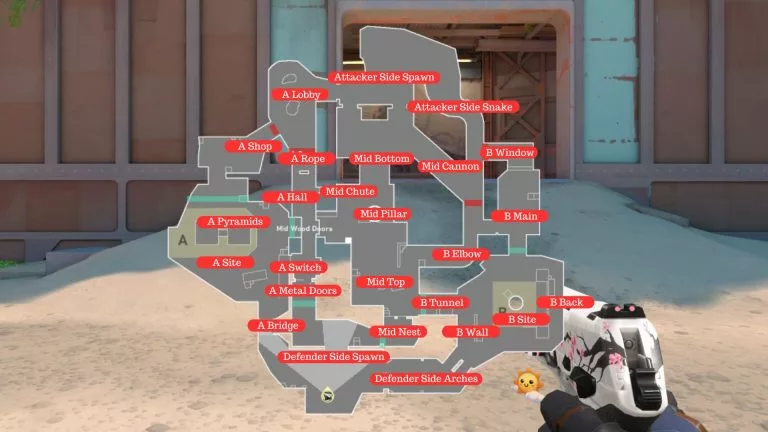
One of these areas is that runs between mid and A site. Officially, this is broken down into rope, hall, switch, and metal doors. However, players run through this area incredibly quickly, making some of these callouts outdated as soon as someone says them. That’s why most people will just call the entire tunnel.
Players also refer to A switch as stairs if the enemy is on the site side of the tunnel. Switch opens a door between A site and the tunnel, so any enemy here can quickly get around the map.
While players came up with and use the term A tunnel, players rarely say B tunnel. More often than not, teammates will say that an enemy is coming from mid if the team is on B site. If the team is mid, they’ll often say that an enemy is coming from B site.
Using early callouts in Valorant
Sometimes it’s more efficient to say where an enemy looks like they’re going, especially on a big Valorant map like Breeze where an early callout can help teammates get the jump. The map is so big that players are more than likely moving around quite a bit. While there are a few places an enemy can hold a defensive angle, there’s more movement happening.
Because of this, some players choose to call out where an enemy is going instead of where they’re at. This can be helpful, as the more information a team has about enemy positions, the better they can play. If learning the official callouts gets overwhelming, using directional callouts can be easier. Quickly explain that an enemy is ahead or behind a more established callout to help the team. This technique is especially useful when paired with pinging.



Related Articles
All Valorant News Valorant
 Valorant
 Valorant
 Valorant
 Valorant
 Valorant
 Valorant
 Valorant
 Valorant
No comments yet




 Ranked Episode 4: Closed Qualifier


 Intel Extreme Masters Beijing 2026: Global Qualifier
 THE POKAL 2026


 CCT South America 2026 Series 5


 CN League 2026 - Stage 2






Leave a Comment
Join our community or access your account to post a comment.